
Our work / Case study
AI Co-Pilot for Building Operators: the System Acts and Proposes, the Operator Decides and Adjusts


Context
What they needed
Operators faced alert overload, paper-based handovers, and no way to explain or learn from past decisions.
What we built
Ekohe built an AI co-pilot whose autonomy is set by risk: it acts on low-risk tasks, advises on high-risk ones and leaves the decision to the operator, with every action traceable and reversible. Less time filtering alerts, more time spent on decisions.
Services and expertises
Details
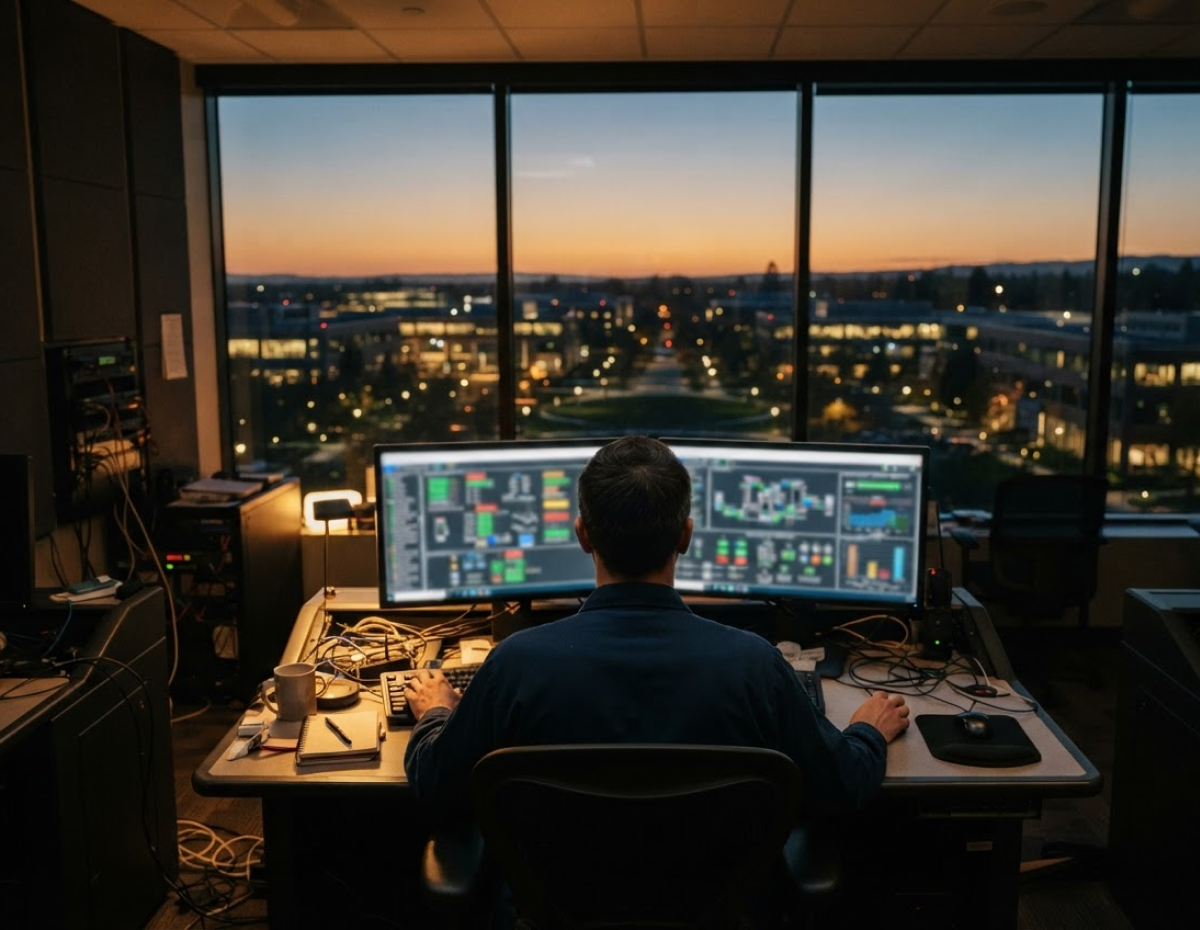
The company's building operators manage HVAC and building management systems across large facilities with limited decision support. Alerts arrived unfiltered, and different operators could make different calls on the same situation. Shift handovers relied on paper, tenant requests had no real-time routing or status, and inspections sat apart from the rest of the system.
One gap mattered more over time: the system could not explain its suggestions, and it did not learn from past decisions. Any automation added here had to be explainable, and controlled by the people accountable for the building.

Alerts are triaged by category and severity before they reach the operator.
On a 71-block site, Ekohe built a proof of concept for a zero UI co-pilot: operators work with it through alerts, briefings and approvals rather than a new interface to learn. It triages alerts in real time, prepares voice-transcribed morning briefings, and routes tenant HVAC requests to operators for approval, with setpoints they can edit before confirming. QR codes on equipment link mobile inspections directly into the same workflow.
Operators spend less time filtering noise and more time deciding. Low-risk actions are executed directly by the co-pilot, high-risk actions are advised and left to the operator, and every decision is logged, timestamped and auditable. Anything done autonomously can be undone.
Let's START